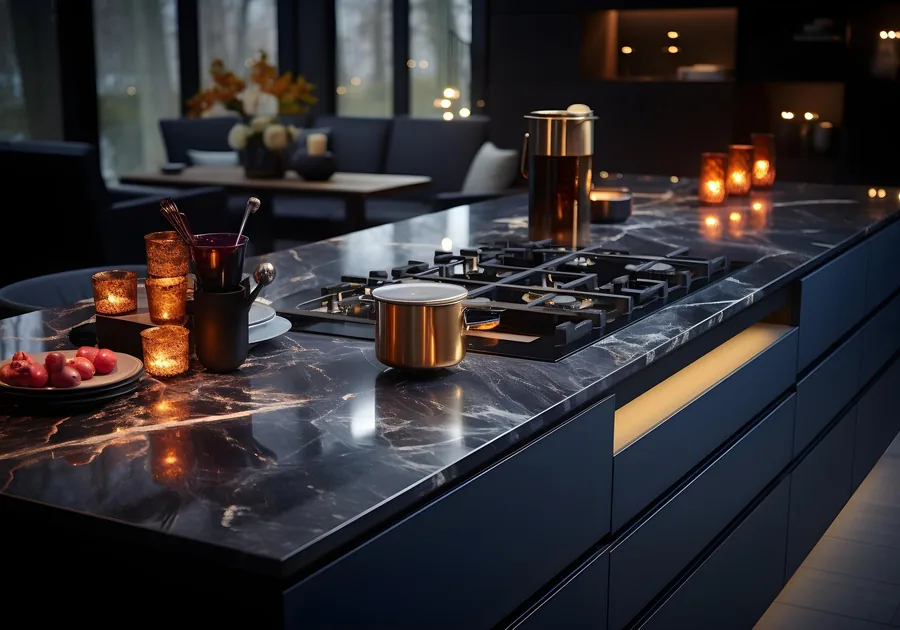
The clicking is the spark module doing its job. If the burner is not catching, either the spark is not reaching the gas or the gas is not reaching the spark.
1. Let it dry out
If this started after a spill or after cleaning the hob, moisture around the electrode is the most likely cause. Take the cap and the ring off, dry everything thoroughly, and leave the parts off for an hour. A surprising share of these calls resolve here.
2. Check the cap is seated properly
The burner cap has to sit flat and square. Lift it and drop it back, feeling for the location pins. A cap sitting proud by a millimetre puts the flame ports out of line with the electrode, and it will click all day without lighting.
3. Clear the ports
The small holes around the burner ring block with cooking residue. Clear them with a pin or a stiff brush, not with anything that could break off inside. Never use a wooden toothpick for this.
4. Look at the electrode
The white ceramic tip should be clean and undamaged. A cracked ceramic leaks the spark to earth before it reaches the gas, and the symptom is exactly this. That is a part replacement rather than a clean.
5. Check whether the other burners work
If every burner clicks and none light, look at the gas supply first, then the module. If one burner is affected and the rest are fine, the fault is at that burner.
The related fault: it lights, then goes out
That is a different problem. A burner that lights while you hold the knob and dies when you let go is a thermocouple or flame sensor failing to confirm a flame, so the safety valve closes again. The system is working correctly and telling you a component has worn out.
When to stop
If you smell gas at any point, stop, leave the property and call your gas utility before anybody else. That is not a repair call.
For everything else, (973) 226-1000.